The Ladies Auxiliary was founded by 9 charter members in 1905 – 1906 to support the “Altenheim” or Home for the Elderly with time, materials, and money. The group was originally called the “Frauenkomitee” or Ladies Auxiliary.
Charter members:
- Mrs. Frank Damkoehler
- Mrs. Herman Duemling
- Mrs. Adam Gettelman
- Mrs. John C. (Elizabeth) Koch (nee Pritzlaff) – first president of Auxiliary
- Mrs. H. August (Emma) Luedke (nee Pritzlaff) – second president of Auxiliary
- Mrs. George Mayer
- Mrs. August Schroeder
- Mrs. William A. Schroeder
- Mrs. William A. Starke
Elizabeth Pritzlaff Koch was the first to offer $5,000 toward establishment of a foundation for elderly Lutherans. Her husband, John C. Koch, made a donation. Her sister, Emma Pritzlaff Luedke, and husband, H. August Luedke, gave money. And her brother, Frederick C. Pritzlaff, contributed. These members of the Pritzlaff family, all from Trinity Church, contributed a total of $20,000 to establish the foundation.



 Elizabeth (nee Pritzlaff) Koch, is credited for having provided the very first contribution of $5000 in 1906 to begin the Lutheran Altenheim. She was John Pritzlaff’s first child, born in 1845 in Wisconsin and became the wife of Mayor John Koch. Elizabeth and Mayor Koch were members of Trinity Lutheran Church.
 One of the most prominent men among the Altenheim’s founders, John C. Koch was Milwaukee’s Mayor from 1893 to 1896. He was born in 1841 in Prussia and came to Wisconsin with his parents in 1854. He was among the first individuals to make a donation of $5000 to begin the Altenheim; he was a founder, incorporator, and the board’s first Vice President. After his term as mayor, Koch re-joined the John Pritzlaff Hardware Co. He was married to Elizabeth Pritzlaff, the oldest daughter of the founder, John Pritzlaff and was a member of Trinity Lutheran church.
 Fred Pritzlaff was born in Wisconsin in 1860 and was both a founder and incorporator of the Lutheran Altenheim. He was among the first to donate $5000 toward its establishment and served on its board for 45 years until his death at age 90 in 1951. He also was a member of Trinity Lutheran downtown. When his father, John Pritzlaff, died in 1900, Frederick took over the company at the age of 39.
 An additional donation of $5000 came from Fred and Elizabeth’s sister, Emma (nee Pritzlaff) Luedke, and her husband, H. August Luedke, a vice president and general manager at Pritzlaff Hardware. August came to Milwaukee from Prussia in 1855 at the age of 5, while Emma, John Pritzlaff’s second child, was born here in 1852. Both were members of Trinity downtown. Interestingly, August and Emma are the grandparents of Wisconsin Congressman and Jim Sensenbrenner.
 Dr. Herman Duemling was born in Schoenebeck, Prussia and emigrated to Milwaukee in 1869 at the age of 23. Dr. Duemling earned a PhD in mathematics from the University of Heidelberg in 1866 and also served in the Prussian war as Lieutenant. He was both a Founder and Incorporator of the Altenheim and became the Altenheim board’s first president in 1906. Prior to that, he taught math and natural philosophy and was professor at Concordia Ft. Wayne for 25 years. He returned to Milwaukee in 1899 to become Editor-in-Chief of George Brumder’s Milwaukee German newspaper “Die Germania”, the largest German language newspaper in North America until that time. Dr. Duemling also wrote books on the natural sciences, and along with his wife Jennie Sulzer, was a member of Trinity Lutheran Church Downtown.
 George Brumder was one of Milwaukee’s early German settlers, arriving in Milwaukee in 1857 from the little village of Breuschwickersheim. Family historical accounts indicate he left for the US with just $1 in his pocket.
 William Schroeder was born in Wisconsin in the 1860s and was the board’s first Financial Secretary. He was the son of John Schroeder, founder of the John Schroeder Lumber Co., based in Milwaukee. The Schroeder lumber company grew into one of the largest and most complete retailers of US lumber. The Schroeder family also owned related businesses such as hardwood flooring, furniture, turpentine and milling, and belonged to St. John’s Lutheran Church on 8th & Vilet.
 William H. Upmeyer, the Altenheim’s first board treasurer, was born in Wisconsin in 1858 and was a member of Grace Lutheran Church downtown. He was a partner in Bunde & Upmeyer, one of the premier jewelers in Milwaukee at the turn of the century.
 John Frank was born in Wisconsin in 1854 and was also a member of Grace downtown. John’s father, August Frank, emigrated from Switzerland and founded Goll and Frank, a wholesale dry goods firm in Milwaukee, where John later became president. John helped organize the Wisconsin Conservatory of Music in 1899. John himself was the first president of the Conservatory.
 His father Charles Sr., came to Wisconsin from Prussia in the late 1850’s and in 1867 founded the Charles Niss & Sons Furniture Store. Charles Jr. took over as president following the death of his father. As a national known furniture dealer, Charels Jr. is noted to have helped organize the National Retail Furniture association in 1891, and in 1896, became the first president of the Wisconsin Retail Furniture Association. He was a member of Grace Lutheran downtown.
 Fred Graffenius was born in 1846 in Brandenburg and came to Wisconsin in 1870, first getting a job with the Milwaukee Iron Co. In 1876, Fred and his wife Marie (nee Schulz) opened a Millinery and Notions business, and in 1877, Fred was instrumental in founding Badger Mutual Fire Insurance Company, a mutual aid society, and in fact joined the company as one of its first agents. Fred also participated in the founding of the Lutheran Children’s Friends Society and belonged to St. Stephen Lutheran Church.
 Henry Wedeking was also born in Germany and arrived in Milwaukee in 1872. An original founding board member of the Altenheim and its first Secretary, Mr. Wedekind was a school teacher at St. Jacobi’s Lutheran School and also a writer of Lutheran church news, writing for the Germania Newspaper and other German publications. Henry was known to travel across the state of Wisconsin to promote the Altenheim among the various German Lutheran communities.




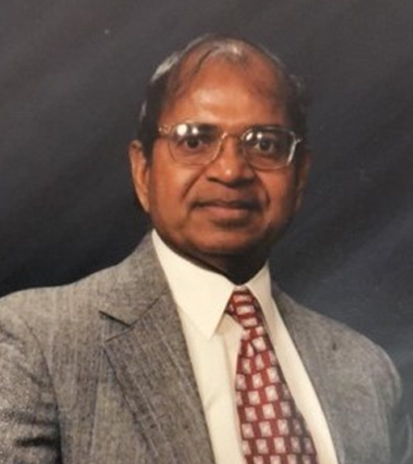 Dr. Champalal Gupta, MD